






FIFA Soccer

 Loading...






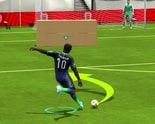
You line up a shot just outside the box in FIFA Soccer, mistime the button press by half a beat, and watch the ball sail over the bar while the crowd noise barely reacts. That gap between intent and result is the first thing anyone notices about this arcade-style soccer build, since there is no licensed roster here, just numbered shirts and a scoreboard ticking through two halves.
| Genre | Arcade Soccer |
| Platform | Browser |
| Controls | Keyboard, arrow keys plus shot and pass buttons |
| Match Format | Two halves against a computer-controlled team |
Ball Control Without a Licensed Squad in FIFA Soccer
Because FIFA Soccer strips away any recognizable team names, the draw comes down to movement and timing rather than picking a favorite club. Passing works on short taps, so beginners usually hammer the shot button from too far out instead of working the ball closer through a couple of short passes. The dribble physics feel a little loose by design, and the ball runs slightly ahead of your player on sharp turns, which catches new players off guard in the opening minutes.
Casual players spam the shoot button anywhere near the box, while anyone chasing a cleaner scoreline learns to hold possession and wait for an open lane instead.
By the second half the defenders close passing lanes more aggressively, and stamina becomes the deciding factor. Community chatter around browser soccer games like this settles on one complaint: the keeper swallows shots hit straight at the body, so players aim for corners instead.
Reading the Keeper and Adjusting Your Attack in FIFA Soccer
A few terms describe the habits that separate a rough first match from a controlled one. Set-piece restart: after a foul, positioning a second attacker for the rebound matters more than the direct strike. Sprint burst: holding the sprint key drains a stamina bar near the player icon, so burning it early leaves a defender exposed late. Through ball: threading a pass between two defenders instead of crossing from the wing is the most reliable way to beat the keeper one-on-one.
Difficulty in this game comes from stamina management, not ramping computer intelligence, since a tired player late in a half turns every sprint into a stumble. New players forget that switching control between defenders, not just steering whoever has the ball, is what stops late counterattacks.
One detail longtime browser-soccer players recognize instantly: the goal net ripples differently depending on shot power, a small touch that has nothing to do with scoring but everything to do with why a well-struck goal still feels satisfying.
FIFA Soccer will never trade on real club crests or star player names, but the arcade rhythm underneath holds up once you stop expecting a broadcast presentation and start reading the keeper’s angles and your own stamina bar instead. Chase the corners, save your sprint for the run to goal, and the numbered-shirt matches feel less like a placeholder and more like their own scrappy little sport.
Comments
There are no reviews yet. Be the first one to write one.