








Utouto Suyasuya

 Loading...






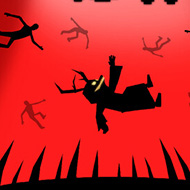


The Sacrifice card in Utouto Suyasuya does not work the way most people expect once they hear the phrase death game. Holding it does not mean instant danger or instant safety the way survival stories usually train you to think — it means that no matter how the group’s majority vote goes during the next round, the holder dies as the Sacrifice regardless of who gets blamed out loud. That single rule reframes the opening stretch: strategy is not about dodging suspicion, it is about surviving a system that may have already decided an outcome before anyone speaks. The story begins with a group of strangers waking up trapped inside a locked facility, and staying alive depends on reading people as carefully as reading the room itself.
| Genre | Horror adventure with heavy visual novel dialogue |
| Format | Episodic, split into numbered chapters |
| Core Mechanic | Majority-vote elimination rounds with hidden role cards |
| Setting | A sealed multi-floor facility with a Floor Master on each level |
| Player Mode | Single player, choice and puzzle driven |
The Sacrifice Card and the Weight of a Majority Vote in Utouto Suyasuya
The core loop splits into two halves: quiet stretches where characters talk, and Main Game rounds where the group votes on who dies. Four hidden roles circulate through these rounds, each changing what a majority vote means. The Sacrifice is cruelest, since its holder dies no matter what the room decides. Sacrifice card: a hidden role overriding the normal vote outcome, killing its holder regardless of the group’s decision.
Beginners who rush through the talking segments to get to the vote tend to miss small contradictions that later decide who they trust. That habit is a common regret players mention after an early chapter.
By the second Main Game round, the facility itself starts to feel like a participant. Its floor rules quietly shape how each vote plays out.
Sara Chidouin’s First Hours Inside the Facility
Sara Chidouin is the character most players spend their earliest hours attached to, since the opening chapters run largely through her as she tries to work out why she’s trapped and who to trust. She is anxious and openly unsure of herself, an uncomfortable lens for a story built on forced votes.
Early on, small interactions with Joe Tazuna and Kanna Kizuchi set the emotional baseline the rest of the cast gets measured against later. Sara’s route also introduces the reception area and its unsettling attendant before the first Main Game forces anyone to act.
Players who pay attention during these quiet stretches usually catch details — a nervous habit, an inconsistent answer, a name someone avoids saying — that pay off two or three chapters later. Those callbacks are part of why replaying Sara’s early chapters feels different once you know where her story goes.
The Floor Masters Watching Every Level of Utouto Suyasuya
Each floor answers to its own Floor Master, who sets that level’s puzzles and enforces its version of the death game’s rules. Each has a distinct personality, and part of the tension comes from not knowing which one is hostile and which might be worth negotiating with. The reception area’s doll-like attendant is usually the first of these figures players meet, and its flat demeanor sets a tone the facility never drops.
Working out what a given Floor Master wants is one of the more debated parts of community discussion. Motives are rarely stated outright.
New players often assume every Floor Master follows the same logic, misreading a level’s puzzle as more forgiving than it is. By the third floor, most players have stopped expecting consistency.
The Needle Trap Beginners Never See Coming
One of the more physical scares comes from a dial puzzle that punishes a wrong answer immediately: enter the wrong combination and a poisoned needle pops out and pricks whoever is handling it. It’s the moment many first-time players stop treating the facility’s puzzles as abstract brain teasers and start treating them as things with real stakes.
Beginners tend to treat the puzzle like a lock to brute-force, cycling through guesses instead of rereading clues from earlier dialogue. The needle trap punishes exactly that kind of guessing, teaching the actual rhythm — read first, act second — earlier than any tutorial could.
That detail is also something only a player notices rather than a viewer. The beat of silence right before it triggers lands differently when your own choice caused it.
Reko Yabusame’s Route and the Cost of Misplaced Trust
Reko Yabusame’s arc is frequently cited as one of the more difficult threads, built around trust that gets tested and broken in ways players don’t see coming on a first read. She presents herself with a nervous formality early on, and the gap between that introduction and what’s revealed later fuels a lot of discussion.
Players who reach her key scenes without paying close attention to earlier dialogue often misjudge her completely, which is exactly the kind of misdirection this cast relies on throughout. It’s divisive — some find the slow reveal rewarding, others find it frustrating that so much hinges on easily missed details.
Once her fuller story clicks into place, it recontextualizes earlier Main Game rounds. Rereading her early scenes afterward is practically a rite of passage among players.
Escalating Stakes Once Joe Tazuna Draws a Card
Joe Tazuna is friendly and easy to like on the surface, which makes it land harder when he ends up drawing the Sacrifice role in a Main Game round. His fate is one of the clearest examples of how the card system undercuts the assumption that likeable characters are protected by the plot.
Once a Sacrifice has been claimed, the tone of later chapters shifts. Remaining characters stop treating votes as a puzzle to solve cleverly and start treating them like a hostage situation, since a correct guess doesn’t necessarily save anyone.
By the next facility floor, that shift is baked into how the group talks to each other. They’re quieter, more guarded, and far less willing to accuse anyone without real evidence.
Kanna Kizuchi, Sou Hiyori, and What Players Still Debate
Kanna Kizuchi and Sou Hiyori sit on opposite ends of how players react to this cast. Kanna’s blunt, guarded manner reads as cold to some and as a reasonable response to a death game to others. Sou Hiyori gets debated for different reasons — his motivations stay ambiguous, and whether his choices are selfless or calculated is a running argument among players.
The pacing itself is something players argue about honestly. The dialogue-heavy chapters take real time, and while some find that essential to caring who survives a vote, others admit the slower stretches test their patience.
Nao Egokoro’s quieter presence often goes underappreciated on a first playthrough. It’s common for players to say her importance only becomes clear once later chapters reveal what she’d quietly been holding onto the whole time.
What happens if you get the Sacrifice card in Utouto Suyasuya?
Whoever holds it dies at the end of that Main Game round no matter how the majority vote goes, so a correct guess about who’s lying does not guarantee survival. It’s one of four hidden roles that override the normal vote outcome.
Who are the Floor Masters in Utouto Suyasuya?
Each level is overseen by its own Floor Master, including the doll-like attendant near the reception area and the figures controlling the puzzle rooms on higher floors. Working out which are hostile is a mystery players track across chapters.
Is the needle trap the only real puzzle danger in Utouto Suyasuya?
No — it’s the most immediate one, since a wrong dial answer triggers a poisoned needle right away. The bigger danger comes from the Main Game votes, where a wrong read on a character like Reko Yabusame or Joe Tazuna matters more than any single puzzle.
Utouto Suyasuya rewards players who treat every conversation as evidence rather than filler, because its Floor Masters, its needle puzzles, and its Main Game votes are built around information the story hands over quietly and never repeats. Long after a chapter ends, it’s the small stuff that stays — the reception doll’s flat stare, the sound before a needle trap fires, the realization a Sacrifice card was in play the whole time. None of the cast walks away clean, and neither does anyone who has actually played through it.
Comments
There are no reviews yet. Be the first one to write one.