






Granny Remake

 Loading...






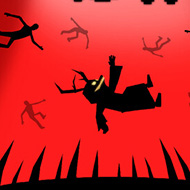


Granny Remake looks like a straightforward game of hide-and-seek inside an abandoned school, but it plays like a tense first-person scramble against a clock you can’t see. You’re locked inside with eight keys scattered across classrooms and storage rooms, and something faster and less forgiving than a normal opponent patrols every corridor between you and the exit. The gap between what the setup implies and what actually happens once you’re crouched behind a desk, listening for footsteps, is why this one gets brought up in horror-game discussions.
Eight Hidden Keys and the School Layout in Granny Remake
The run is built around one objective: find all eight keys hidden through the school before Granny finds you first. WASD handles movement and the mouse controls where you’re looking and aiming, which sounds simple until you’re checking a locker, listening for footsteps, and lining up an escape route in the same few seconds.
A typical opening stretch follows a rough order most players fall into without being told:
- Get your bearings in the entry hall before committing to a direction
- Clear the nearest classrooms first rather than sprinting for the far end
- Note which rooms are already searched to avoid doubling back
- Save grenades for a moment when noise won’t give you away
By the time four or five keys are found, the school stops feeling like a static map and starts working against you. The remaining spots are usually closest to wherever Granny is circling.
Weapons, Grenades, and the Real Cost of Noise
You’re not defenseless, which separates this game from a pure stealth title. G throws a grenade, R reloads, F grabs an item, and Shift lets you run when a hallway is clear enough to risk it. Every one of those actions makes noise, and noise is exactly what draws Granny toward your position.
Beginners tend to treat the grenade and running controls as an escape button for every close call, which backfires since one loud mistake can undo several minutes of careful searching. Learning when a grenade is worth the noise, rather than firing on reflex, is one of the bigger skill jumps in this game.
Once a player has died to Granny a couple of times, most treat every weapon as a last resort. Ammo gets hoarded instead of spent on reflex.
Why First-Timers Rush the Wrong Rooms
New players consistently make the same mistake: sprinting toward the biggest, most obvious rooms first, assuming that’s where the useful keys must be. Some important finds sit in easy-to-skip spaces like supply closets, and rushing past them means returning later with Granny already alerted to your area.
Crouching with Ctrl slows you down but quiets your footsteps enough to search a room while Granny passes outside. It’s a trade-off players don’t take seriously until a near-death encounter forces the point.
By the middle of a run, most players stop exploring randomly and start working room by room. The school starts feeling less like an open map and more like a checklist cleared in order.
The Prone Position Nobody Uses Until It Saves Them
Space handles jumping and X drops you into a prone position, easily the most overlooked control in the school. Most first-timers never touch it, since crouching already feels slow enough, but going fully prone gets you under certain gaps and out of Granny’s line of sight when a hallway offers no other cover.
The first time prone saves a run, it tends to happen by accident — someone hits X in a panic rather than as a planned move. That moment usually convinces a player to use it deliberately from then on.
It’s a small detail. It clicks once you’ve played through a close call.
What Granny Remake Players Still Argue About
The most divisive part is how unforgiving a single mistake can be — one badly timed sprint or grenade thrown at the wrong moment can end a run that had eight keys nearly in hand. Some players find that tension is the point, others think the punishment is steeper than it needs to be.
Community discussion also circles around how Granny’s patrol seems to shift once several keys are collected, making late-game rooms feel more dangerous than early ones. Whether that’s a deliberate difficulty curve or just nerves is a debate that never settles.
What most players agree on is that finishing a full run, all eight keys in hand, hits differently after several failed attempts than on a first try. That earned tension is what keeps people replaying instead of walking away after one loss.
Granny Remake works because it never lets the eight-key objective feel routine, whether that’s a distant door creaking open or the moment Granny’s footsteps suddenly stop. It’s a game built on a simple premise stretched over a school-sized map, and the tension holds because it never lets you feel fully safe, even in a room already cleared.
Comments
There are no reviews yet. Be the first one to write one.