


Wonderland


 Loading...



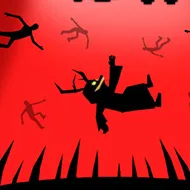




You spawn into the park with four other players, the gate locks behind your squad, and the only instruction anyone gives you is that you have to find a way out before your shared lives run dry. Wonderland is a horror game built around that single loop, but the loop never plays out the same way twice, which is the first thing most new squads notice once the lights start flickering.
| Genre | Horror / Adventure |
| Squad Size | Solo or up to 5 players |
| Platforms | Mobile, PC, and Console |
| Core Goal | Escape the park before your squad’s lives run out |
Why No Two Runs of Wonderland Look the Same
The park layout, the order mini-games appear in, which monster spawns near you, and which events trigger along the way are all randomized on every attempt. That single design choice changes how players treat the game entirely: memorizing a route the way you might in a linear horror title just doesn’t work here, because the route you learned last time may not exist on your next run.
This matters most for squads who try to speedrun early sections. A path that took ninety seconds to clear on one attempt might route you straight into a lever array or a maze section on the next, and the game gives no warning before it does. Veteran players describe this randomness using the word “seed” borrowed from other roguelite communities, even though Wonderland never uses that term itself — it’s just the closest shorthand for “the park configuration you got this time.”
Beginners consistently underestimate how much this changes pacing. A cautious squad that clears a straightforward layout can finish faster than an aggressive squad that gets unlucky with back-to-back chase zones, which flips the usual horror-game logic of “faster is always better.”
Puzzles, Levers, and Mazes That Gate Progress in Wonderland
Four confirmed puzzle types show up scattered through the park, and knowing them in advance is the single biggest advantage a new squad can have:
- Sequential puzzles — step-by-step challenges that must be solved strictly in order
- Lever arrays — multi-switch mechanisms that need more than one player coordinating inputs at once
- Mazes — disorienting navigation sections with no fixed layout to memorize
- Platforming obbies — timed or skill-based jumping sections, often while something is closing in behind you
Solving these isn’t optional flavor content. Progress through most areas depends on clearing at least one puzzle, and in several encounters solving one is the only way to break free once a monster has cornered your squad. Lever arrays in particular cause the most arguments in voice chat, since a squad of solo players who split up to explore often can’t reach both switches fast enough once one gets triggered.
The Wonder Shop, the Hammer, and Fighting Back
Unlike most horror games on the platform that only let you run and hide, Wonderland lets you fight back. Tickets collected during a run are spent at the Wonder Shop, where the Hammer and the Minigun both sit as combat options alongside the Map and the Stopwatch. The Minigun’s own in-game description warns that it’s loud, which pulls in extra monsters if you fire it carelessly — a deliberate risk-reward trade that community discussions bring up constantly when arguing over whether combat or pure stealth clears runs faster.
Bandages round out the shop’s survival side, letting you patch up a wounded teammate mid-chase instead of abandoning them. The Wonder Mask adds a third option entirely: a temporary disguise that lets you slip past certain park entities until its durability runs out, at which point you’re exposed again with no warning cue beyond the mask simply failing.
None of these tools save a squad from bad stamina management, though. Sprinting drains stamina fast, and it only recovers while walking — standing still does nothing for it — so players who panic-sprint through an early corridor often find themselves stuck jogging when Bunny, the ambush predator that leaps out in narrow park corridors, decides to show up.
Mr. Sun, Wonder, and the Names Behind the Horror
Mr. Sun is the grinning mascot at the center of the park’s identity and the only figure the game names directly on-screen. Wonder is referenced in the Hammer’s own item description as the one who crafted it, and the official game description credits Wonder as the creator of the park itself. A second figure, Wander, is credited in the Map’s description as the one who drew it, though the community still debates whether Wander and Wonder are meant to be the same entity split across two names or genuinely separate characters.
The two other named threats are more mechanical than narrative. The Glutton is a colossal worm entity that anchors a dedicated high-stakes chase sequence, and The Desperate is a tunneling mole creature that hunts squads specifically during the Mole Chase zone, one of the sections players bring up most when discussing which encounter in the game scared them worst on a first run.
Difficulty Modes From First Words to Fearless Child
Wonderland ships with four difficulty tiers: First Words on Easy, First Steps on Medium, Big Kid on Hard, and Fearless Child on Nightmare. The names lean into the park’s fake-childlike theming rather than describing mechanical differences directly, which caught a lot of players off guard at launch since nothing in the menu explains what actually changes between tiers beyond monster aggression and puzzle timing. Players chasing a zero-death clear tend to grind Easy or Medium runs first specifically to learn puzzle layouts before attempting Fearless Child, where a single mistake with three shared lives can end the run in minutes.
How many players can join a Wonderland run?
Squads support solo play up to a full group of five. Lives are shared across the whole squad rather than tracked per player, so a five-person group and a solo player both start with the same three lives, which changes how cautiously larger groups tend to play compared to someone going in alone.
What does the Wonder Mask actually do?
It grants a temporary disguise that helps you avoid detection from park entities, but it has limited durability and stops working once that runs out, so it’s better treated as an emergency tool than something to rely on for an entire run.
Is the Mole Chase the hardest section in the game?
Many players single it out as the toughest confirmed encounter so far, since The Desperate tunnels and resurfaces without a predictable pattern, forcing squads to react rather than plan, unlike the more readable ambush pattern Bunny uses in corridor encounters.
Wonderland earns its reputation less from any single scare and more from how unstable the whole park feels run to run — the same corridor that was empty the last time you passed through it might hide Bunny this time, and no amount of memorizing the Mole Chase zone prepares you for a lever array showing up somewhere new. That unpredictability is exactly what keeps squads coming back to try Fearless Child even after they’ve already seen Mr. Sun’s grin more times than they’d like to admit.
Comments
There are no reviews yet. Be the first one to write one.