





Lexispell


 Loading...







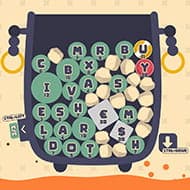
You drag two letter tiles together in the cauldron, they merge, the merged tile doubles in point value, and for a moment everything feels manageable — then you look at the score threshold for the next Classic Craft stage and realise the word you just spelled barely touched it. That gap between comfortable spelling and actual scoring is what Lexispell spends twelve stages teaching you to close. Merging is not decoration. It is the entire economic backbone of a run, and players who skip it to spell quickly almost never make it past stage five.
| Genre | Roguelike word game / physics puzzler |
| Platform | PC, Mac (Steam, itch.io) |
| Classic Craft stages | 12 (9 in demo) |
| Game modes | Classic Craft, Letter Rush, Pool (Jar), Daily Challenge |
| Shopkeeper | Henry |
The Merge Chain: What Lexispell Is Actually About
Lexispell presents itself as a word game and it is — but it is also a tile economy game where your letter pool is a resource to be shaped before you spell anything. Matching identical tiles raises their point multiplier. Spelling a word that uses a high-value merged tile adds that multiplier to every letter in the word. Veteran players describe a board finally clicking into a big merge chain as the moment the game earns its keep, and that feeling is available from the very first run if you know to look for it.
The physics element is not cosmetic. Tiles fall and drift, which means positioning matters for which merges become available. A Q that drifts left of its matching Q cannot merge until something nudges them together. Casual word game players often treat the cauldron like a static grid and wonder why their scores fall short. Once you start thinking about tile placement as an active decision — angling drags, watching where a letter settles — the game opens up considerably.
One moment that players consistently describe once they have run Classic Craft a few times: reaching stage seven or eight and suddenly understanding that the score threshold has not changed much but the optimal word has. Early stages reward six-letter words. Later stages reward four-letter words from merged tiles with high multipliers over eight-letter words from raw tiles. Relearning what a good word means mid-run is the skill that separates people who stall at stage six from those who finish all twelve.
Upgrades, Items, and Henry the Shopkeeper
Between Classic Craft stages, Lexispell offers a shop run by Henry, where you spend coins on scrolls, potions, wands, and runes. Scrolls trigger passive effects — the DOUBLE scroll only activates on words of seven letters or more, which changes how you draft boards. The GAMBLER upgrade gives a significant multiplier but has a one-in-five chance of destroying itself when triggered, which the community debates endlessly: is it worth the variance, or does it cost runs at the worst possible moment? Most experienced players take GAMBLER situationally, not as a default pick.
Runes are bought from Henry and influence which letter types spawn in the cauldron, letting you nudge the pool toward letters that suit your current upgrades. If you have the STARTER scroll activated for words beginning with S, buying a rune that raises S spawn rate is the kind of synergy that defines a strong run. This is the Balatro-adjacent element that the community talks about most — finding a combo that clicks is where the replay value lives.
Wands and potions are single-use items that provide immediate effects rather than passive scaling. Many newer players burn wands early and arrive at the harder Classic Craft stages without safety nets. The general community advice is to hold at least one wand for the boss encounter, which throws out normal spelling rules entirely and forces you to spell under a constraint — such as every valid word repeating a specific letter — that your build may not handle cleanly.
Letter Rush and Pool: The Other Modes in Lexispell
Classic Craft gets most of the attention, but Letter Rush and Pool (also called Jar mode) play very differently and reward different skills. Letter Rush drops new tiles into the cauldron continuously — you spell as fast as possible to stop the board overflowing, and the run ends when it does. There is no downtime for careful merging. Typing speed and vocabulary breadth matter more than economic planning, which is why competitive players and casual word game fans often prefer it over Classic Craft’s deliberate pace.
Pool mode fills the cauldron with a fixed set of letters and asks you to squeeze as many valid words from that pool as possible before it runs dry, with no new tiles arriving. Community members describe it as closer to a locked crossword than a falling-tile game. It rewards breadth of vocabulary more directly than Classic Craft does — finding the obscure four-letter word that uses the remaining Z and X is satisfying in a completely different register than landing a perfect merge chain. Players who claim Lexispell is just a chill experience are usually thinking of Pool mode. Players who insist it is a demanding optimisation game are usually in Letter Rush.
Is Lexispell worth playing if you have never liked word games?
The merge and rune systems mean that vocabulary alone does not determine your score, which changes the game’s feel significantly. Players who dislike static word games often find Classic Craft engaging because the economic layer gives them something to optimise beyond just knowing long words.
Why does the boss in Classic Craft feel so different from regular stages?
Boss encounters change the spelling rules temporarily — one fight requires every valid word to contain a repeated letter, another imposes different constraints. Your wands and potions can be used here but not in the shop, so arriving at a boss with at least one wand is the standard preparation the community recommends.
What is the Lexicopedia and when does it matter?
The Lexicopedia is an in-game reference that displays rune behaviour, letter types, and available upgrades. It was significantly reworked in version 0.0.26 of the demo. Experienced players use it to check upgrade interactions before committing to a rune purchase — the ALLITERATION scroll in particular has specific triggering conditions that the Lexicopedia clarifies.
Lexispell is a game that rewards the second run more than the first and the fifth run more than the second. The first time through Classic Craft, most players are learning that merging matters. By the fifth run, they are planning rune purchases around specific scrolls bought from Henry and holding wands for boss stages. That compression of strategy into a session you can finish in under an hour is where the game finds its niche, and it is a niche that neither Wordle clones nor standard roguelikes quite fill.
Comments
There are no reviews yet. Be the first one to write one.