









DrainSim

 Loading...




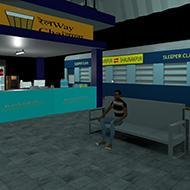



You duck into a maintenance alcove as heavy footsteps echo down the corridor, killing your flashlight and holding still while whatever is hunting you passes just a few feet away. That single moment of frozen breath sums up most of what DrainSim asks of a player: stay unseen, manage what little light and stamina you have, and never assume the corridor ahead is actually empty.
The Corridor DrainSim Traps You In
The setting is deliberately cramped, a run of tunnels and service corridors where visibility rarely extends more than a few steps in any direction. Light sources are limited and worth conserving, since flicking a flashlight on the moment it seems safe is often exactly what gives a player’s position away.
Sound plays as large a role as sight. Footsteps, dripping water, and distant scraping all carry through the corridors, and learning to separate ambient noise from something actually closing in is a skill that only develops after a few close calls.
There is no map overlay to lean on, which means every choice about which direction to move is based on what can actually be heard and seen in the moment, not on prior knowledge of a layout.
Stamina as the Real Limit in DrainSim
Running is available, but it drains a stamina meter fast enough that sprinting through an entire corridor is rarely an option. Players who burn through stamina early often find themselves stuck walking at a crawl right when a fast escape would matter most.
Avoiding a pursuer usually comes down to timing rather than raw speed, since ducking into a side passage or waiting out a patrol costs far less stamina than trying to outrun it directly. That patience is not the instinct most new players start with.
Getting caught generally ends the attempt outright, which is part of why DrainSim rewards a slow, deliberate pace over a reckless one. A single bad sprint at the wrong moment can undo several minutes of careful movement.
Learning to Read the Dark
Beginners tend to treat limited visibility as a problem to solve with more light, when the opposite is usually true. Staying in shadow and moving only when it feels safe protects a player far better than lighting up every corner along the way.
By the time a player has made it through a few corridors, the instinct to stop and listen before moving becomes automatic, and that habit is really what separates a long run from a short one in DrainSim.
None of this is forgiving on a first attempt, and that difficulty is exactly what players debate most. Some find the tight resource management tense in a good way, while others feel the stamina drain punishes exploration a little too harshly for a game built around careful movement.
What makes DrainSim worth returning to is how much of the tension comes from restraint rather than action, holding still in a dark alcove while stamina slowly recovers and a pursuer’s footsteps fade back down the corridor.
Comments
There are no reviews yet. Be the first one to write one.