





Animal Hospital Anomalies

 Loading...







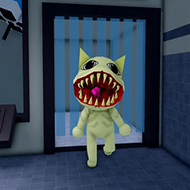
You and up to three other players clock into the same shift, and within the first few minutes it’s clear that Animal Hospital Anomalies runs entirely on how well those four people communicate — one missed call at the check-in window can undo everything the rest of the team just handled cleanly.
Four Players, One Animal Hospital Anomalies Shift, No Room for Guessing
Cooperative pressure changes the math compared to running a shift alone, the same way any multiplayer game shifts once more people share responsibility for the same clock. One player working the window while others handle treatment sounds efficient until an emergency event overlaps with a disguised patient, forcing someone to split attention between two urgent problems at once.
Coordinating roles before a shift starts tends to matter more than raw individual skill once the hospital gets busy. A team that agrees in advance on who owns the window, who handles treatment rooms, and who floats between problems tends to absorb a bad wave far better than four players reacting individually to whatever feels most urgent in the moment.
Communication breaks down fastest during overlapping events, which is exactly when a missed callout at the window costs the most. A quick warning shouted across the hospital about a suspicious patient is often worth more than any single player’s individual accuracy.
Moving Past Intern Into Specialized Classes
Ten classes exist in total, each starting at level one and improving through experience earned during shifts. Moving beyond the starting Intern option changes more than cosmetics — different classes shift starting stats, available items, and utility in ways that noticeably change how a shift plays out.
What the Surgeon and Doctor Classes Actually Change
The Surgeon and Doctor classes lean into treatment speed and patient survival odds rather than check-in accuracy, which makes them a natural fit for players who’d rather handle the medical side while a teammate manages the window. Neither class removes the need to still watch for anomalies elsewhere in the building.
Secretary Duties Nobody Volunteers For
The Secretary class handles administrative pressure that’s easy to overlook until it isn’t — paperwork, scheduling conflicts, and the kind of background tasks that pile up fast during an emergency event. It’s rarely anyone’s first pick, but a shift without someone covering it tends to fall apart in ways that aren’t obvious until it’s too late to fix.
The Secret Agent Class and Its Robux Price Tag
Unlike most classes purchased with Animal Coins earned through shifts, the Secret Agent class costs Robux directly, and it comes with a notable perk — shooting a confirmed anomaly under this class still rewards sanity, unlike the standard classes where only tasing does. That single change shifts strategy meaningfully for players who prefer a gun over a taser.
Critical Patients on the Clock
Certain patients arrive already in critical condition, and the clock starts the moment they do. Someone mid-surgery, a visitor who’s fainted, or a patient caught in a fire all share the same rule: a fixed window to stabilize them before the outcome turns permanent.
Prioritizing critical cases over routine ones sounds obvious until two critical patients land at the same time, which forces an uncomfortable triage decision most solo players never have to make. In a full four-player shift, that decision usually falls to whoever’s closest rather than whoever’s most qualified, which is its own small source of tension.
- Surgical patients need continuous attention once a procedure begins.
- Fainted visitors require a faster response than a routine check-in.
- Patients caught in a fire event take priority over anything non-critical nearby.
Fires, Death Rituals, and Sudden Emergencies
Random events unlock over time and reshape what a shift demands from the team. Fires force a race against spreading damage, death rituals introduce a patient whose condition ties directly into a ritual mechanic rather than standard treatment, and emergencies simply flood the hospital with a sudden influx of new cases, some already critical on arrival.
How the Hazmat Update Changed Animal Hospital Anomalies
Content added since the Hazmat update shifted how certain events play out, adding new pressure points that weren’t part of earlier shifts. Veteran players who learned the hospital before that update often need to relearn a few habits that no longer hold up the same way.
New players who started after the update sometimes assume the current pace has always been the norm, which occasionally causes friction in party chat when a longtime player references a routine that no longer applies. Checking patch notes between major updates saves that kind of confusion before it turns into a wasted shift.
Leveling a Class Without Wasting a Shift
- Pick one class per session rather than switching mid-shift to avoid losing experience momentum.
- Prioritize shifts with steady patient flow over chaotic emergency-heavy ones when trying to level efficiently.
Consistency during ordinary shifts tends to level a class faster than chasing high-chaos emergency rounds for bragging rights alone.
Between coordinating four players, choosing the right class for a given shift, and reacting fast enough when a death ritual or fire event overlaps with a disguised patient at the window, Animal Hospital Anomalies rewards teams that communicate as much as it rewards any single player’s reflexes.
Comments
There are no reviews yet. Be the first one to write one.