



Click To Continue

 Loading...

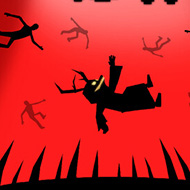


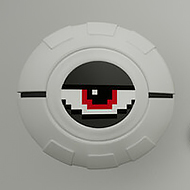
What happens the instant you stop moving in Click To Continue? Time stops with you. That single rule is the foundation of the game, and it changes how every room, bullet, and red glass-like opponent has to be approached.
| Genre | First-person shooter / tactical puzzle |
| Core mechanic | Time advances only when the player moves |
| Enemies | Red, glass-like humanoid figures that shatter on a killing blow |
| Weapons | Firearms with very limited ammo, throwable objects, a katana |
| Structure | Short, stylized levels built around a single combat puzzle each |
The Rule That Defines Click To Continue
Standing still does not pause the game outright, but it slows everything to a near-crawl, turning incoming bullets into slow-moving objects you can sidestep with a small adjustment. The moment you move again, time surges back to full speed. That relationship is why the phrase time moves only when you move has become the shorthand players reach for when explaining the game.
What makes this rule interesting in practice is that it turns every room into a puzzle disguised as a shootout. A cluster of enemies that would be an impossible firefight in a normal shooter becomes manageable once you step forward just enough to trigger one attacker’s shot, then hold still, aim, and fire back before time resumes. Beginners tend to treat the game like a conventional shooter, and that gets punished once three or four enemies open fire at once.
The learning curve is about retraining a basic gaming instinct. Most shooters reward constant motion and quick reflexes. This one rewards short bursts of motion followed by deliberate pauses, and players who keep playing it like a twitch shooter walk into bullets they could have read by standing still a beat longer.
Shatter Kills and the Red Glass Enemies
Enemies share a distinct look: solid red, faceted glass, no individual faces or names. A single well-placed bullet ends one instantly, followed by the enemy shattering into fragments rather than simply dropping, a cue players immediately recognize as a shatter kill. That feedback is one of the most talked-about details among players, since it makes every hit feel immediate and final.
Guns are not the only way to trigger a shatter kill. A thrown object or a punch can stun or finish an enemy, though melee generally takes more than one hit while a bullet is always lethal. That asymmetry is core to how the game teaches resource management, since ammo is scarce enough that players constantly weigh a bullet against closing the gap with fists.
The katana deserves special mention, since it behaves differently from every other weapon. It never breaks, kills instantly on a solid hit, and can deflect bullets when swung at the right moment. Players who master its timing can clear rooms without firing a shot, and cutting bullets from the air is one of the techniques most discussed in community guides.
Common Enemy Encounters
- Single armed enemies that need only one well-timed bullet or melee finish
- Groups of two or three attackers that force a choice between gunfire and melee
- Enemies wielding melee weapons of their own, which can be taken and reused
Weapon Scarcity and Improvisation
Firearms run dry fast, often after a handful of shots, which means picking up a dropped weapon is not optional flavor, it is the core survival loop. Nearly anything in a level’s environment can become a thrown weapon in a pinch, and players enjoy discovering how many ordinary objects turn into viable tools.
This scarcity is deliberate, and it is one of the more divisive aspects of the design. Some find scavenging the most satisfying part of the game. Others find running dry mid-fight frustrating, particularly in denser rooms. Neither side is wrong.
Advanced players lean hard into weapon chaining: throwing a gun the instant it is empty to stun or kill an approaching enemy, grabbing whatever it drops, and continuing without a full stop. Executing that chain smoothly against enemies at different angles is a clear sign of a player who has moved past the basics.
Level Design as Short, Stylized Puzzles
Rather than long, sprawling stages, Click To Continue is built from short vignettes, each centered on a single combat scenario. A level might be nothing more than one room and a handful of enemies, but the compact scale is what makes the time-motion rule readable.
That brevity is deliberate. A longer level would blur the link between one movement and its consequence, while a short one keeps the puzzle legible start to finish.
- Enter a new area and pause before moving to read enemy sightlines
- Advance a short distance to trigger reactions, then hold still to reassess
- Prioritize armed enemies before dealing with melee threats
- Pick up dropped weapons immediately rather than keep a weaker option
- Chain kills without pauses once a room’s layout is understood
Because each level is short, replaying one to try a cleaner, faster solution becomes second nature, and a lot of the lasting appeal comes from that replay loop. Once a level is fully understood, executing it in one smooth motion becomes its own goal.
The Meta Layer Behind the Combat
Beyond the combat puzzles, Click To Continue carries a self-aware layer most players do not expect going in. The framing treats the game as something running on a computer, complete with a desktop-style hub between levels and text exchanges that comment on what the player is doing rather than narrating a plot. It is unusual for a game built around shooting red glass figures, and a big part of why it gets remembered as more than a mechanical showcase.
That meta framing extends into small touches players notice immediately: after clearing a level, a full-speed replay plays back the run just completed, letting the player watch their own chaotic, time-bent combat unfold at normal speed for the first time. It turns a fragmented, stop-start sequence of careful movements into something that looks, in replay, like a fluid action scene.
Not every player responds to the meta layer alike. Some find it a clever extension of the mechanic. Others see it as a layer the combat puzzles could stand without, since the shooting and time control are strong on their own. That split comes up often enough in player discussion to be worth acknowledging.
How Difficulty Builds Across the Game
Early levels tend to introduce single enemies or small pairs, giving new players room to internalize the motion-time relationship without being overwhelmed. By the time you reach rooms with enemies at multiple angles, the puzzle-like nature of each encounter becomes unmistakable, since one wrong movement can put you in the sightline of two attackers at once.
Later stretches lean harder on environmental complexity: tighter spaces, enemies appearing from multiple directions, and setups that punish players who try to brute-force a room the way they got away with early on. The curve is less about faster enemies and more about denser decisions packed into short bursts of real time.
What ties the curve together: the core rule never changes. Every challenge is solved with the same tool, moving deliberately and reading the frozen world around you.
How does the time mechanic in Click To Continue actually work?
Time advances near full speed only while the player is moving, aiming, or acting, and slows to a near standstill the instant the player stops. That turns bullets into something that can be read and reacted to in a way a normal-speed shooter never allows.
What is the fastest way to deal with a room full of enemies?
Chaining kills without idle pauses clears a room efficiently. Use a bullet or the katana on the first threat, grab the dropped weapon, and move straight into the next target instead of reassessing after every kill.
Why do enemies shatter instead of just falling over?
The shatter effect is tied to the red, glass-like design of every enemy. It gives each kill a distinct payoff that players point to when describing what makes the combat satisfying compared to a standard shooter.
Everything about Click To Continue comes back to one idea: motion is time, stillness is control. Whether it is timing a katana swing to slice a bullet out of the air or chaining a gun throw into a melee finish before an enemy can shatter you first, the game keeps asking the same question in new shapes, turning a chaotic room of red glass figures into something closer to a solved puzzle.
Comments
There are no reviews yet. Be the first one to write one.