





Sir, We Have an Orc Problem


 Loading...



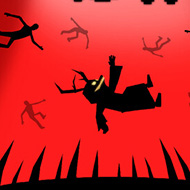





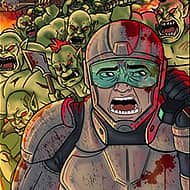
You drop your first Gunner behind the gate, watch the counter tick toward the opening wave, and then the tree line fills with green. Sir, We Have an Orc Problem starts small and simple, then keeps adding pressure until every choke point on the map matters. The first few runs feel like a straightforward shooting gallery, but the moment the horde starts flowing around your walls instead of into them, the run stops being about reflexes and starts being about layout.
| Genre | Incremental Tower Defense |
| Core Loop | Build, defend, upgrade, repeat |
| Enemy | Orcs, arriving in waves of thousands |
| Session Length | Short, run-based |
Turret Placement and Choke Points in Sir, We Have an Orc Problem
The core mechanic sounds basic on paper: place turrets, let the orcs walk into them, survive the wave. What actually decides a run is how the path bends. Because the horde moves on a physics simulation rather than a fixed grid, orcs pile up, spill around corners, and bottleneck wherever a wall forces them together. Players quickly learn to treat these bottlenecks as kill zones rather than open lanes.
- Gunners hold early lanes cheaply and reliably
- Flamethrowers punish anything that stacks in a corridor
- Mortars and Cannons handle the orcs that slip past the front line
- Tesla Coils clear whatever survives the initial choke
Beginners tend to spread turrets evenly across the map instead of stacking them behind a single narrow point. That habit works for the first couple of waves and then collapses once orc counts climb into the thousands.
Reading the Orc Horde as It Scales
Early in the game a wave might be a few hundred orcs shuffling in a loose column. By the time you reach Level 5, that same column has split into multiple approach angles, and a turret setup that worked before starts leaking orcs from the side you forgot to cover. The difficulty curve in Sir, We Have an Orc Problem isn’t about tougher individual orcs so much as sheer volume overwhelming a lazy layout.
Once Tesla Coils appear in the upgrade tree, players get their first real answer to that volume problem, since a single coil arcs damage across a whole cluster instead of hitting one target at a time.
Building the Upgrade Tree Between Runs
Every run pays out resources whether you win or lose, which keeps failed attempts feeling productive rather than wasted. Community discussion around the game repeatedly circles back to a simple idea: buy economy upgrades before chasing damage upgrades, because a stronger income snowballs into stronger turrets faster than raw firepower does on its own. Players who dump everything into a single powerful turret early tend to stall out once wave sizes outpace what one tower can handle.
The upgrade tree rewards patience. A slower, more deliberate build order usually beats an aggressive one that runs out of resources mid-wave.
Some players farm early stages specifically to fund late-game unlocks rather than pushing forward as fast as possible.
Active Abilities for Critical Moments
Strafing runs, orbital lasers, and nukes exist for the moments when placement alone isn’t enough. These abilities recharge on a timer, so using one too early on a manageable wave often means having nothing left when a real crisis hits. Strategy-minded players save at least one big ability for the tail end of a wave, when orc density peaks and a single well-timed strike can turn a near-loss into a clean clear.
Sir, We Have an Orc Problem and the Cost of a Clean Clear
Why do orcs keep breaking through my defenses?
Usually because turrets are spread too thin rather than stacked behind a choke point. Concentrate Flamethrowers and Mortars where the path narrows instead of covering the whole map evenly.
What should I upgrade first?
Economy upgrades before turret damage upgrades. Faster resource gain compounds across every future run, while early damage upgrades lose value once wave sizes scale up.
When do Tesla Coils become worth building?
Once waves start clustering orcs together instead of arriving as a thin line, which typically happens as you push past the early levels and the horde starts splitting into multiple approach paths.
Some players find the campaign short and want more maps or tower types, and that criticism comes up often enough in community discussion to be worth acknowledging honestly. What keeps people replaying anyway is the moment a stacked Tesla Coil finally breaks a wave that looked unwinnable seconds earlier — that specific feeling is why Sir, We Have an Orc Problem holds attention even with a limited campaign.
Comments
There are no reviews yet. Be the first one to write one.