









That’s Not My Mom!

 Loading...
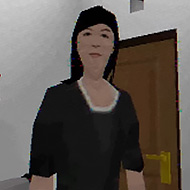



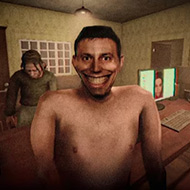
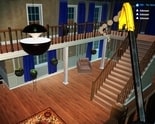



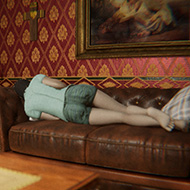
You step into a plain, everyday room, and nothing on screen explains what you’re supposed to do next. That’s Not My Mom! drops you into a simple scene and expects you to work out the goal yourself, using the objects and small interactions placed in front of you. There’s no cutscene and no tutorial walking you through every click — you’re simply there, in an ordinary setting, with a task quietly waiting to be figured out.
What stands out about the game is how understated it is. Rather than a wall of instructions, it leans on a handful of everyday objects and short interactions to guide you toward the current objective.
The Everyday Setting Behind That’s Not My Mom!
The scene you’re placed in feels ordinary on purpose — a plain room with a handful of interactive points. Early in the game, most of what you’re doing is clicking around, testing which objects respond.
There isn’t a visible score counter or a timer pushing you forward, so the pace is set by how quickly you notice what the scene wants. Some players clear it in a few short attempts, while others take longer, and neither approach feels punished.
By the time you’ve clicked through most objects, the goal usually becomes clear enough to finish without much extra guesswork.
What That’s Not My Mom! Actually Asks You to Do
The core loop is straightforward: observe the room, interact with what’s available, and respond correctly to whatever the game is asking. It’s the kind of light, objective-based structure you’d expect from a short exercise rather than a lengthy adventure.
Because so little is explained upfront, a fair amount of the experience comes down to reading the scene for clues — noticing what looks slightly out of place, or what reacts differently than expected. That kind of observational play is common in small point-and-click releases.
Nothing about the interactions escalates into anything elaborate. The lack of explicit feedback feels uneven at times, since it’s not always obvious whether a click did nothing or quietly moved things forward.
- Click through every visible object in the room before assuming you’ve found the one that matters
- Pay attention to any short prompts or text cues, since they’re usually the clearest hint toward the objective
- Treat a wrong response as information rather than a dead end
- Is That’s Not My Mom! a long game? No — it’s built around a single short scene and a single objective, closer to a quick diversion than anything with multiple stages.
- Do you need prior experience with similar games to understand it? Not really, since basic point-and-click controls are all that’s needed to follow along.
- Is there a wrong way to fail the objective? Clicking the wrong object doesn’t end the attempt outright — it nudges you to reconsider what the scene is asking, keeping the pace low-pressure.
Taken as a whole, That’s Not My Mom! is a small, quiet game built around noticing details in an ordinary room. Its appeal comes from that simplicity rather than in spite of it.
Comments
There are no reviews yet. Be the first one to write one.