





Toca Boo

 Loading...





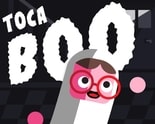
What happens when a ghost runs out of polite ways to ask someone to leave its own house? That question sits at the center of Toca Boo, where you spend every round as a small, quiet spirit trying to talk a family of prospective buyers out of touring the property any further before the sale goes through.
| Genre | Ghost Survival |
| Platform | Browser and downloadable build |
| Controls | Hold the left mouse button to move, P or Esc to pause |
| Objective | Scare off the house buyers before their tour is complete |
Moving as a Ghost Without Feet in Toca Boo
The first thing that trips people up is the movement itself. You hold down the left mouse button and the ghost drifts toward the cursor, floating rather than walking, with a soft delay before direction changes land. Beginners overcorrect, yanking the cursor back and forth and losing the smooth glide that lets the ghost slip behind furniture unseen.
Early rounds are forgiving because buyers only glance around a single room before moving on. By the time a second or third buyer shows up, the pacing tightens, and the ghost has to plan a route between rooms rather than reacting room by room.
A typical haunting round in Toca Boo unfolds in a fairly consistent order, and knowing it ahead of time changes how you position yourself.
- The buyers enter through the front room and begin looking around casually.
- The ghost has to pick a hiding spot or object to work from before they notice movement.
- A scare attempt either lands, sending a buyer stumbling back, or fizzles if the timing was off.
- The tour continues into the next room, and the window to scare again resets.
Reading a Buyer’s Fright Before the Tour Moves On
Buyers in this game don’t react instantly, and that half-second delay is where new players lose their nerve and either scare too early or bail out of a hiding spot before the moment pays off. Watching their body language, the pause near a doorway or the lingering over furniture, tells you when a scare will actually register instead of just startling them for a beat.
Players who treat every room the same way burn their best tricks on buyers already halfway convinced to leave. The ones who slow down and read the room first get more mileage out of fewer attempts.
One detail only clicks after a few rounds. The ambient music shifts subtly right before a buyer is about to give up and head for the door on their own, and recognizing that cue means saving your best scare for someone who actually needs the push.
Haunting Tools and Room Priorities in Toca Boo
Not every corner of the house is worth defending equally, and figuring out which rooms buyers care about is half the strategy. Kitchens and living rooms get lingered in longer, giving the ghost more chances to work, while hallways are usually just a quick transition.
The haunting toolkit leans on classic tricks rather than anything elaborate. Community chatter around the game usually circles back to the same favorites.
- Flickering the lights to unsettle a buyer before they enter a room.
- Slamming a door shut behind someone already inside.
- Knocking a picture frame or object off a shelf at the right moment.
- Creaking the floorboards to make a buyer hesitate near a doorway.
Players debate how forgiving the timing window feels; some find the scare input generous enough to feel too easy once you know the pattern, while others say a mistimed attempt still costs a full opportunity. Both opinions show up regularly among people who’ve spent real time with Toca Boo.
Questions Players Ask About Toca Boo
Do you ever play as anything other than the ghost in Toca Boo?
No, every round keeps you in control of the same small spirit defending the house, and there is no buyer-controlled mode. The entire design leans on you learning the ghost’s drifting movement and scare timing rather than switching perspectives partway through.
Is there a way to fail a round permanently in Toca Boo?
A round ends once the buyers finish their tour without being scared off enough times, at which point the house is lost for that attempt. There’s no mid-tour save point, so a missed door slam or a wasted flicker usually means starting again from the front room.
What made Toca Boo stand out among itch-style ghost games for players?
Most feedback around this game points to how well the small touches, the music cue before a buyer gives up, the floorboard creak, the picture-frame knock, work together despite the short runtime. It earned a solid four-out-of-five average from people who tried it, which for a compact haunting-loop game is a decent showing.
Toca Boo never pretends to be a long game, and it doesn’t need to be. The ghost’s drifting movement, the room-by-room read on a buyer’s patience, and that one music cue right before someone heads for the door are enough to make a short haunting round worth replaying.
Comments
There are no reviews yet. Be the first one to write one.