







Universe Sandbox 2

 Loading...




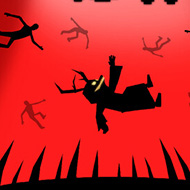

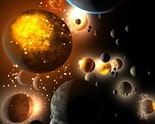
Universe Sandbox 2 looks like the kind of serious astronomy tool a science class would assign, but it plays like an arcade toybox built for one purpose: watching a planet come apart in real time. There is no orbital-mechanics homework here, no star catalog to memorize, just a rotating world and an arsenal built to ruin it.
Universe Sandbox 2 Trades Real Astronomy for a Weapon Wheel
The moment the planet loads, the interface makes its priorities clear. Instead of gravity sliders and mass calculators, players get a wheel of over thirty weapons, ranging from a basic nuke to a fully charged solar beam. Tapping the globe drops whatever is selected, and the planet reacts immediately, cracking, melting, or simply vanishing depending on what hit it.
Beginners usually open with the nuke because it is the first icon in the list, and that is a reasonable place to start, but it also undersells how deep the rest of the wheel goes. A single nuke barely dents a planet’s crust, while a coordinated pass with heavier weapons can crack it open entirely, and new players often quit before finding that out.
Community shorthand for a planet stripped down to its molten core is glassing it, and reaching that state is the unofficial goal most sessions build toward. The game never states it as an objective anywhere in the interface.
Nukes, Railguns, and the Death Ray Beneath Universe Sandbox 2
The early-game weapons feel almost restrained compared to what unlocks later. Nukes and missiles handle small-scale damage, meteor showers fling five or six meteoroids at once across a wide radius, and the death ray slowly melts through crust in a straight line rather than detonating outward. Each behaves differently enough that switching weapons mid-session changes the whole shape of the destruction.
Once players start layering weapons instead of firing one at a time, the difficulty curve of actually destroying a planet quickly flattens. A common advanced sequence in player guides runs railgun first to expose the mantle, then a black hole dropped right after to pull the loosened debris clear, which does more damage than either weapon alone.
Customizing Meteors and Lasers Before You Strike
Select certain weapons in Universe Sandbox 2, meteorites, rockets, the laser beam, and a small cog icon appears in the bottom-right corner of the screen. That menu lets a player widen a laser’s beam and change its color, scale up a meteorite’s impact radius, or speed up how fast it falls, and it is easy to play through several sessions without ever noticing it is there.
Beginners tend to fire weapons at default settings and wonder why a laser barely scorches the surface, when widening it in that cog menu turns the same weapon into something that carves a visible trench. Regulars who record their sessions lean on this constantly, tuning laser color and meteor size purely for how a clip looks before ever pressing the trigger.
Why the Black Hole Outlasts Every Other Weapon in Universe Sandbox 2
Ask regulars which weapon they open with when they actually want to finish a planet off, and the black hole comes up constantly. Rather than an instant blast, it sits beside the planet and lets gravity do slow, methodical work, pulling mass in over several seconds while debris never quite escapes its pull.
That patience is exactly what divides players. Some find the black hole the most satisfying weapon in the entire wheel precisely because it is not instant, while others consider it too slow next to the immediate payoff of a nuke, and that disagreement shows up constantly in comment sections under gameplay clips.
System Smash and the Star Systems Universe Sandbox 2 Lets You Break
- Three preset star systems, including a recreation of our own Solar System
- Custom star systems built from scratch, with planets and orbits set manually
- Collision experiments between planets, with mass changes shifting orbits realistically
- A black hole dropped into a system rather than onto a single planet, disrupting every orbit at once
System Smash is the closest Universe Sandbox 2 comes to acting like a real simulation, and it is also the mode most casual players skip entirely. Slamming two planets together here scatters debris in a way that reads as surprisingly believable, chain reactions cascading outward without any scripted trigger behind them.
Alien Invasions and Monster Weapons in Universe Sandbox 2
Past the physics-based weapons sits a stranger tier: alien ships that fly in from behind the camera and bombard the surface with green beams, plus outright monsters like a space kraken and a space dragon that tear at the crust directly. None of it pretends to be scientific, and the game does not try to make it feel that way either.
Early in a session these feel like a novelty, but by the time a player has cycled through every physics-based weapon, the alien tier becomes the reason to keep playing rather than an afterthought. A swarm of UFOs converging on one hemisphere is a specific sight regulars bring up unprompted, since it looks nothing like anything else in the wheel.
Casual Destroyers and System Builders Both Play Universe Sandbox 2
Two very different habits show up around this game. One kind of player wants a quick payoff, tapping a nuke or two and moving to the next planet within a minute of loading in. The other spends most of a session inside System Smash, nudging orbits and testing what mass change does to a planet before ever triggering a collision on purpose.
A third habit sits between them: players who try to destroy a planet using the fewest possible weapons, treating the wheel as a puzzle rather than a toybox. None of these approaches is wrong, and switching between them from one session to the next is common once the novelty of the first few nukes wears off.
The Solar Beam Is the Last Weapon Universe Sandbox 2 Gives You
The solar beam sits at the very top of the escalation. Rather than firing from a ship or a satellite, it charges the sun itself before releasing a beam that ends the planet completely, and reaching it functions as the unofficial finish line of a full destruction run. Most players save it for last on purpose, since using it early skips past everything else the wheel has to offer.
One honest criticism that surfaces often: once you have used every weapon a few times, there is no persistent progression carrying over between planets, no unlocked upgrades, just the same wheel reset on a fresh world. That repetition is either relaxing or a dealbreaker depending on why someone opened the game in the first place.
- Does Universe Sandbox 2 simulate real orbital mechanics? Not in the way the name implies. This build is built around destruction rather than an accurate astronomy sandbox, and the physics serve the spectacle of cracking a planet apart rather than any classroom-accurate orbital modeling.
- What is the strongest weapon in the wheel? The solar beam, which charges the sun before unleashing a burst that fully destroys the targeted planet, sits above nukes, railguns, and even the black hole in raw finishing power.
- Can you build a custom star system? Yes, through the System Smash mode, where players can construct planets and orbits from scratch or choose from preset systems, including our own Solar System, then trigger collisions and gravitational chaos on purpose.
Universe Sandbox 2 never bothers pretending to be the classroom astronomy tool its name suggests. Once the black hole finishes pulling a glassed planet apart, or the solar beam closes out a run, what’s left is a destruction toy that earns its replay value through the weapon wheel rather than through anything resembling real orbital science.
Comments
There are no reviews yet. Be the first one to write one.