





Night at Nuggit’s


 Loading...





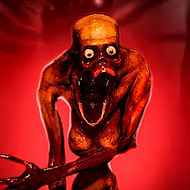
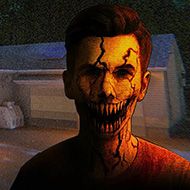
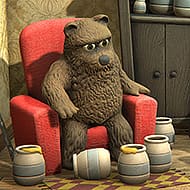
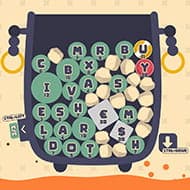

You slide into the chair inside the Furnace Room at 12 AM sharp, and the first sound you notice is the low, hungry rattle of the Chikn-shaped furnace waiting to be fed. In Night at Nuggit’s, that rattle does not wait for you to get comfortable, and neither does anything else in the building.
| Genre | Point-and-click survival horror |
| Setting | An overnight shift running from 12 AM to 6 AM |
| Core loop | Camera monitoring, furnace management, door defense |
| Currency | Nuggets, spent in the Shop |
| Progression | A series of unlockable Nights, harder as you go |
Playing as Licowice Through the Night Shift
In Night at Nuggit’s, you take control of Licowice, a strange, unidentified creature who serves as your physical stand-in for the shift. Licowice does not talk, does not move from the main office, and does not get any real explanation, which is part of the point. The game is not interested in giving you a backstory to lean on. It hands you a chair, a set of tools, and a building full of characters who used to be friendly and now clearly are not.
The building itself is small enough to memorize within a night or two, but that familiarity does not make the game feel safe. Each room connects to the next in ways that only really click once something has already gotten close. Beginners tend to treat the office like a bunker, when really it is closer to a listening post: the real work happens through the cameras.
Speedrunners describe the early nights as a rhythm exercise, since threats are predictable enough to script around once you know their patterns. Newer players are still learning to read the Camewas feed under pressure.
Reading the Camewas Feed Without Losing Time
The camera system in Night at Nuggit’s is called the Camewas, and it is the single most important tool you have. Every character worth worrying about telegraphs its approach through the cameras before it ever reaches your door, and players who check the Camewas efficiently tend to survive far longer than players who panic-flip through every room out of habit.
The catch is that the Camewas takes time to use, and time is the one resource Night at Nuggit’s never gives back. Sitting on a single feed too long while a character is closing in from the other side of the map is a classic beginner mistake, and it is usually what turns a manageable night into a scramble.
Once you reach the later Nights, the building introduces characters whose behavior actively punishes lazy camera habits, forcing you to develop a checking pattern instead of a checking routine. That shift, from routine to pattern, is usually the moment new players start calling themselves competent.
Keeping the Chikn-Shaped Furnace Running
Power in Night at Nuggit’s is not abstract. You physically walk to the Furnace Room and shovel chicken nuggets into the Chikn-shaped furnace to keep the building’s systems online. Let it run empty for too long and you lose access to the Camewas and the door controls right when you need them most, which is a punishment the game is not shy about handing out.
Balancing furnace trips against camera checks is the real skill test in Night at Nuggit’s. Walking away from the office to shovel nuggets means losing eyes on the building for several seconds, and by the time you reach the halfway point of a shift, that gap is long enough for something to slip past unnoticed.
Furnace management becomes second nature after a few completed nights, but it never stops costing you attention. Even experienced players budget their shoveling trips around known character schedules rather than doing it on a fixed timer, because a badly timed trip can cost a whole run.
Defensive Tools: the Scawy Mask and the Doors
Beyond the cameras and the furnace, Night at Nuggit’s gives you a Scawy Mask and a set of doors you can slam shut with Space or Enter. The mask is meant to be worn at specific moments to trick certain characters into passing by, while the doors are a last resort that costs power every second they stay closed.
Newer players tend to slam doors far too early, treating every noise as an emergency. That habit drains power fast and leaves the furnace starved by the middle of the shift. Once you learn which sounds are actually dangerous, door usage drops dramatically, and Night at Nuggit’s starts to feel far less chaotic.
- Watching the Camewas for early warning before a character reaches your hallway
- Wearing the Scawy Mask only when a specific character calls for it
- Reserving door slams for confirmed, close-range threats
- Timing furnace trips around quieter stretches of the shift
Bezel Events and Shifting Character Relationships
Every night in the game can trigger what the community calls Bezel Events, sudden shifts in behavior that range from a minor lighting change to a full alteration of how a character moves through the building. No two nights play out identically once Bezel Events start appearing regularly, and that unpredictability is exactly what keeps veteran players coming back to Night at Nuggit’s.
Character relationships add another layer on top of this. The cast reacts to each other, not just to you, and those Dynamic Mechanics can make a night easier or dramatically harder depending on which characters happen to cross paths. It is a system players openly debate, since a rough Bezel Event roll can make an otherwise mastered night feel unfair.
That randomness is one of the more divisive parts of the design. Some players enjoy never knowing what a night will throw at them, while others feel a bad roll can undo careful, learned play.
Spending Nuggets in the Shop
Completing a night rewards you with Nuggets, the in-game currency used to buy tools and cosmetic changes in the Shop. Early on, most players sink their Nuggets into anything that eases the furnace grind, since that mechanic causes the most avoidable failures in the first several nights.
Once the basics are covered, the Shop becomes more about personal taste, letting you unlock skins and smaller quality-of-life options rather than anything strictly necessary. It is a slow-burn progression system, built around repeated attempts rather than one big unlock.
By the time you reach the building’s later characters, your Nuggets stop feeling optional and start feeling like a second progression track running alongside the Nights themselves.
Custom Mode and Endless Mode
Once the main Nights are cleared, Night at Nuggit’s opens up a Custom Mode that lets you adjust character behavior and difficulty settings directly, and an Endless Mode built for players who want to push a single shift as far as it can go without a hard stop. Both modes lean on the same core loop of Camewas checks, furnace trips, and door timing, just stretched further.
Endless Mode in particular tends to expose bad habits fast, since there is no scripted end point to hide behind. Community leaderboards built around Endless runs are one of the more active corners of the fanbase, and they say a lot about how deep the base mechanics actually go.
Custom Mode, meanwhile, is where a lot of the harder community challenge runs come from, letting players stack difficulty modifiers on top of characters who are already unforgiving by default.
Common Questions About Night at Nuggit’s
What causes the furnace to lose power so quickly in Night at Nuggit’s?
Power drops fastest when you leave the Chikn-shaped furnace unfed for long stretches or hold doors closed too often. Both drain the same pool, so balancing furnace trips against door usage is the main way to keep a shift stable through 6 AM.
What exactly is a Bezel Event?
A Bezel Event is a night-specific change that alters gameplay, sometimes cosmetically and sometimes by changing how a character behaves. They are randomized per night, which is why two attempts at the same night in Night at Nuggit’s rarely feel identical.
How do you unlock Custom Mode?
Custom Mode opens up after clearing the main set of Nights, giving you direct control over character difficulty and behavior settings so you can build your own version of a shift once the scripted content has been cleared.
Night at Nuggit’s is not a game that rewards memorizing a script and repeating it; the Bezel Events and shifting Dynamic Mechanics make sure of that. Whether you are watching the Camewas for the first flicker of trouble or timing a furnace trip around a Nuggets purchase from the Shop, the shift from 12 AM to 6 AM stays tense precisely because Licowice never gets any easier to protect.
Comments
There are no reviews yet. Be the first one to write one.