

Short Life 2

 Loading...

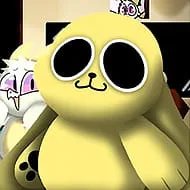

What happens when you jump a half-second too early and a ragdoll body is still mid-arc when a saw blade reaches the same spot? In Short Life 2 the answer is immediate and usually gruesome, and that gap between intention and outcome is the entire point. Every level is built to punish exactly that kind of misread timing, over and over, until you stop guessing and start actually watching the trap ahead of you.
| Genre | Ragdoll physics obstacle course |
| Levels | 20+, unlocked in sequence, difficulty rises each stage |
| Rating System | Up to 3 stars per level, based on injuries taken |
| Unlockables | New characters, found through hidden stars |
Every Swing of the Ragdoll Has a Cost in Short Life 2
The core control set in Short Life 2 is short: jump, duck, move left or right. What makes it demanding is that the character is a full ragdoll, so momentum carries through every action instead of snapping cleanly between poses. Jump into a low ceiling and the body folds awkwardly instead of just stopping. Land badly off a ledge and a leg can catch the edge in a way that stalls your next input by a fraction of a second, which in a level built around saws and swinging blades is often the difference between clearing an obstacle and losing a limb to it.
That physics-first approach is also why players describe Short Life 2 as harder than it looks on a first watch. Clips of clean runs make each level look like a straightforward run-jump-duck pattern, but reproducing that pattern with a body that reacts to every bump and momentum shift takes real repetition.
The Difference Between Passing a Level and Earning Three Stars
Clearing a level in Short Life 2 only requires reaching the end, but the star rating attached to each stage tracks something stricter: how many injuries you picked up on the way. A flawless run, no cuts, no crushed limbs, no near-misses that still register as damage, earns the full three stars. Take a few hits along the way and you’ll still finish the level, just with a lower rating attached to it.
- Three stars: the level completed without any recorded injury.
- Two stars: completed with minor injuries along the route.
- One star: completed, but with enough damage taken that the run barely counts as clean.
For players just trying to unlock the next level, one star is enough. For anyone chasing a full clear of Short Life 2’s star totals, the difference between a two-star and three-star run usually comes down to memorizing exactly where a single trap fires and adjusting timing by a fraction of a second.
Hunting the Small Stars Hidden in Short Life 2’s Levels
Separate from the injury-based rating stars, each level also hides small collectible stars in spots that aren’t on the direct path to the exit, tucked behind trap clusters or above ledges that require an extra detour to reach. Collecting enough of these unlocks new playable characters, which gives Short Life 2 a reason to revisit levels you’ve already cleared instead of just pushing forward through the level list.
- Clear the level normally first to learn where the traps actually fire.
- Replay with the trap timing memorized, watching side paths and ledges for a visible star.
- Detour for the star only once you’re confident the main hazard nearby won’t punish the extra time spent.
Saws, Giant Hands, and the Rest of the Trap Roster
The trap variety is what keeps individual levels from blurring together. Spinning saws are the most common early threat, but later stages introduce a knife machine that fires in a set rhythm, razor-edged wooden bars that swing across narrow corridors, and a giant hand hazard that sweeps through open areas with almost no warning tell before it moves. Bombs round out the set, punishing players who linger in one spot too long while lining up a jump.
None of these traps are randomized. Every saw, every swing of the giant hand, follows a fixed pattern, which is exactly what makes repetition useful in Short Life 2: a level that looks impossible on the first attempt usually has a readable rhythm once you’ve died to the same trap two or three times.
The knife machine in particular tends to trip up players who treat it like a simple obstacle to jump over, since its firing rhythm doesn’t line up with the instinctive timing most players bring in from other platform-style games. Learning that one hazard’s specific cadence, separate from everything else in the level, is often the single biggest jump in a player’s completion rate once it clicks.
Checkpoints: The Only Mercy the Game Offers
Given how punishing individual traps can be, checkpoints are what keep Short Life 2 from feeling unfair rather than just difficult. They activate automatically the moment you pass one, so there’s no menu to fuss with mid-run, and dying afterward drops you back at that point instead of the start of the level. Longer levels with a giant hand section or a dense run of saws tend to place a checkpoint right before the hardest stretch, which quietly signals to the player which part of the level the designers expect to take multiple attempts.
Why does my Short Life 2 run keep losing stars even when I finish the level?
- Because the star count tracks injuries, not just completion. Any recorded hit, even a glancing one from a saw or swinging bar, lowers the rating below three stars, so a level can be finished and still count as a rough run.
Do I need all three stars to keep progressing through the levels?
- No, a single star is enough to unlock the next level. The extra stars matter for unlocking new characters through the hidden collectibles system, not for the basic level progression.
Are the trap patterns in Short Life 2 random each time I replay a level?
- No, saws, the giant hand, and the knife machine all follow fixed patterns. That consistency is what makes memorization useful, since a level that seems unbeatable on the first try usually has a learnable rhythm once you’ve seen the trap fire a couple of times.
Short Life 2 isn’t really about reflexes in the twitch-shooter sense, it’s about pattern recognition layered on top of a body that won’t always do exactly what you tell it to. Once you’ve memorized where the giant hand sweeps or when the knife machine fires, the ragdoll stops feeling like a liability and starts feeling like the whole reason the game is worth finishing.
Comments
There are no reviews yet. Be the first one to write one.