








Innards

 Loading...
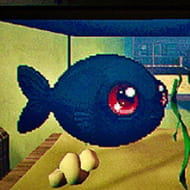




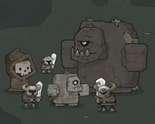



What happens when a metroidvania throws out ordinary 3D space entirely and builds its map out of hyperbolic geometry instead? Innards answers that question by putting you in negatively-curved corridors where paths branch faster than they have any right to, and where getting lost is less a design flaw than the entire point.
| Genre | Action / Metroidvania |
| Platform | Windows |
| Status | In development |
| Average Session | About an hour |
| Community Rating | 4.0 out of 5 |
Dex and the Withinternets: The World Innards Throws You Into
You play Dex, a low-effort functionary for a crime syndicate who would honestly rather stay home with his Personal Computer than do anything heroic. That reluctant-hero framing matters, because it sets the tone for a game that treats its own plot with a shrug even while its world design is doing something genuinely ambitious underneath.
The setting is the Withinternets, a decayed digital afterlife that formed once older networks detached from the “flesh-plane” and rotted into something new. It’s a strange premise to hang a game on, and Innards leans into that strangeness rather than smoothing it out for newcomers.
Dex isn’t chasing glory. He’s chasing rent money, which the syndicate ties directly to shutting down a spreading cult before it threatens business, and that mercenary motivation keeps the story grounded even as the geometry around it gets increasingly alien.
Junkbags, Cults, and the Mother Carrion Rumor
The enemies you fight are called Junkbags, self-assembling digital scavengers that range wildly in size and temperament, some barely a threat and others clearly built to wear down your patience. Their variety is one of the more consistently praised elements in player feedback.
Threaded through the world is a rumor about a cult worshipping an avatar of a figure called Mother Carrion, whose remains supposedly birthed the entire electric territory Dex is walking through. The game never rushes to confirm or deny how literal any of this is, and that restraint is part of what keeps the writing interesting rather than just decorative.
Lore hunters tend to gravitate toward this thread specifically, picking through environmental clues and NPC dialogue to figure out how much of the cult mythology is meant to be taken at face value inside the fiction of Innards.
Moving Through Hyperbolic Space Without Getting Lost
The core navigational challenge is learning to read paths that branch far more aggressively than Euclidean instincts prepare you for. Early on, corridors that look short can fork into a half-dozen viable routes within a few steps.
Once you’ve cleared a few zones, the branching stops feeling like noise and starts feeling like a puzzle you’re slowly getting fluent in, which is where the game’s Metroidvania backbone becomes obvious even under all the disorientation.
Math-minded players specifically call out how the tiling patterns are consistent rather than random, meaning experienced players start predicting junctions before they even see them.
The Cursword, the Hourglass Toss, and Fighting in Innards
Combat centers on a slashing weapon called the cursword, controlled essentially through your mouse pointer, alongside an ability referred to as the hourglass pointer toss. Between the two, fights become a mix of melee positioning and ranged utility that rewards herding groups of Junkbags rather than just swinging blindly.
A common early complaint is that basically everything soaks up more hits than expected, which slows the opening hour down before the toolkit really opens up. It’s a fair criticism, and one the game doesn’t fully resolve until you’ve unlocked more of the cursword’s range.
Completionists chasing every unlock report that combining the hourglass toss and the cursword too aggressively can occasionally crash the current build, a known rough edge rather than a hidden feature.
Uma and the Rafflesias: What the Detours Are For
Scattered through the hyperbolic folds are objects players call rafflesias, destroyed in optional side detours that branch off the main path near an NPC named Uma. Nobody in the community seems entirely certain what clearing them accomplishes mechanically, and that mystery is treated as a feature rather than an oversight.
- Locate a rafflesia cluster near a known junction past Uma
- Clear the Junkbags guarding the approach
- Destroy the rafflesia itself and note any world state changes
Several longtime players describe each rafflesia run as its own miniature dungeon crawl, distinct enough in layout that repeating the loop rarely feels like busywork.
Bugs, Crashes, and Other Rough Edges Players Report
Running on a fully custom engine built specifically for hyperbolic rendering means Innards ships with more friction than a typical indie release. A black-screen issue tied to gamepad connection is common enough that reconnecting controllers has become a standard first troubleshooting step.
None of this is hidden or downplayed by the game itself, and testers actively reporting these issues through the community Discord are treated as part of how the project moves forward rather than a nuisance.
Why Innards Feels Like Spyro Turned Inside Out
The clay-like pre-rendered art style gives everything a tactile, slightly uncanny texture that fits the rotting-network premise better than clean modern 3D ever could. It’s an unusual choice, and it pays off by making the Withinternets feel handmade rather than procedurally generated.
Describing the moment-to-moment feel, the closest comparison is a collect-a-thon platformer with the exploration axis bent into hyperbolic space instead of familiar three dimensions, which is disorienting in exactly the way the game wants it to be.
- What do the rafflesias do in Innards? Their exact mechanical effect isn’t clearly stated by the game itself, but destroying them past Uma’s checkpoints is treated by the community as meaningful progress, distinct from simple combat encounters with Junkbags.
- Is Innards singleplayer or multiplayer? It’s a singleplayer experience built entirely around Dex’s solo path through the Withinternets, with average sessions running around an hour at a time.
- How do you fix the black screen bug in Innards? Disconnecting and reconnecting any attached gamepads is the known workaround, since the issue is specifically tied to controller detection rather than the save file or hardware more broadly.
Innards is rough by its own admission, but that roughness is inseparable from what makes it worth exploring: a hyperbolic Metroidvania where Dex’s cursword, the rafflesias past Uma, and the rumors about Mother Carrion all add up to something no cleaner, safer game would risk building.
Comments
There are no reviews yet. Be the first one to write one.